


Chefs in Tällberg Test TEGERA’s New Cut Protection Liners
At Hotell Gyllene Hornet in Tällberg, the kitchen team led by Head Chef John Mathiasson has tested TEGERA’s latest cut protection liners – 916 and 918. In a busy kitchen with fast-paced prep work and frequent cutting tasks, we wanted to evaluate how the gloves perform in practice.

Safety in Every Slice – TEGERA in the Restaurant Kitchen in Dalarna
In picturesque Tällberg, overlooking Lake Siljan, sits Hotell Gyllene Hornet – a place where traditional charm meets modern culinary craftsmanship. Here, Head Chef John Mathiasson and his team work in a restaurant kitchen that demands efficiency, precision, and a high level of safety.
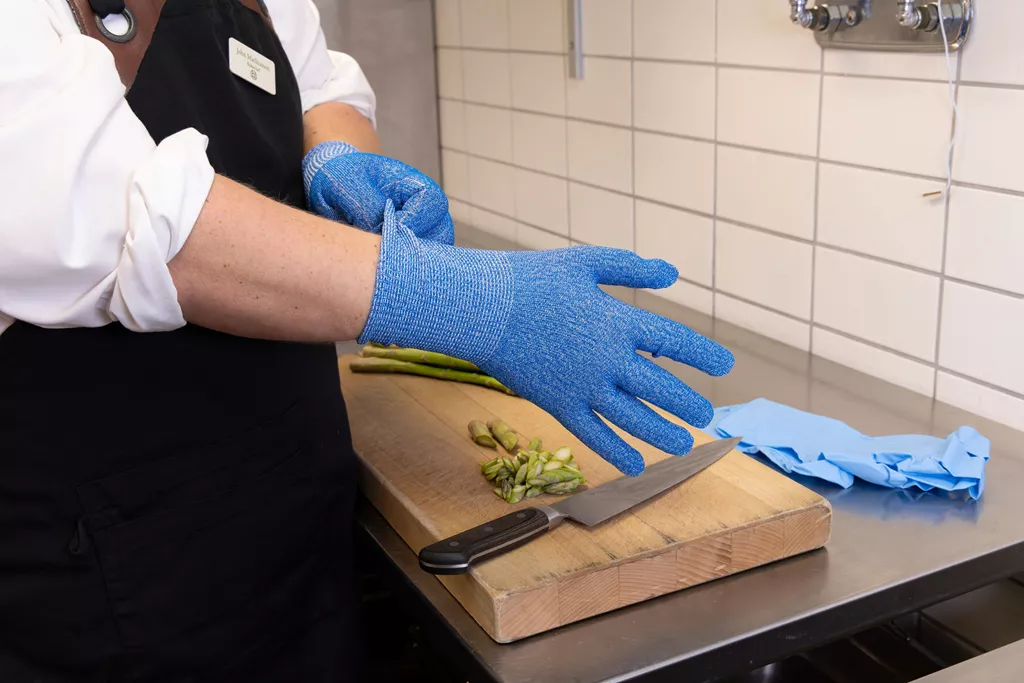
Over a period of time, they tested TEGERA 916 and 918, two new cut protection liners designed for food environments and meant to be worn underneath disposable gloves.
The goal was to see how the products perform in a professional kitchen with varied tasks and cutting moments.
Two Cut Protection Liners – Optimized for Food Handling Environments
TEGERA 916 – thin, flexible and Cut F certified
This food-approved Cut F liner with CRF® technology combines strong cut protection with excellent dexterity and fingertip sensitivity. It’s ideal for precision tasks where both protection and control are needed. The glove is washable at 90 °C up to five times and designed to be worn under a disposable glove.
TEGERA 918 – added warmth and comfort in cold kitchen environments
TEGERA 918 offers the same high cut protection but features a brushed acrylic lining that provides extra comfort when working in cold rooms or handling chilled ingredients. This liner is also food-approved and washable at 90 °C.
TEGERA 916
Cut F liner for food contact
Washable Cut F food liner for high dexterity and protection in food handling.
TEGERA 918
Cut F for food contact with extra thickness
Insulated food liner with Cut F protection for cold food handling environments.
A Restaurant Kitchen – but Highly Recommended for Meat Processing Environments
John and his team do not work in a slaughterhouse environment, but they emphasize that these products are highly suitable there as well. They see clear benefits in environments where meat is cut for long periods and where temperatures are often low.
“I would absolutely recommend these liners for meat processing facilities where you are cutting all day. The protection is strong and your hands stay warm,” says John.
In their restaurant kitchen, they tested the gloves in many different tasks – from prepping vegetables and meat to handling the grill.

Most Helpful When Using a Mandoline
The mandoline is mainly used to slice or shave large quantities of potatoes and vegetables quickly – a task where it’s unfortunately quite easy to injure your hands.
The team quickly noticed that TEGERA’s liners provided an increased sense of safety. They could work quickly and smoothly, as the liner reduced the risk of injuries during the intense cutting tasks.
An Unexpected Advantage: Some Heat Insulation – Though Not Designed for Heat Protection
One unexpected bonus was that the liner offered a slight heat-insulating effect during grilling and when handling hot trays.
It’s important to highlight that TEGERA 916 and 918 are not intended for heat protection. But the extra comfort during warmer tasks was still a welcome surprise.
“It wasn’t something we expected, but it was nice that they offered a bit of extra comfort when working at the grill,” says John.
Zero Cut Injuries During the Test Period
Throughout the entire test period, there were no cut injuries in the kitchen. This clearly shows how the right protection can make a big difference in a busy restaurant environment.
John particularly highlights the importance for new team members and interns:
“Experienced chefs cut themselves less often, but for newcomers in the kitchen it makes a huge difference to start with proper protection. It gives everyone peace of mind,” he says.
Cut protection in the kitchen isn’t only about preventing injuries – it’s about creating a workflow where chefs can focus on their craft with complete confidence.
Looking for more? These related pages may help
From Lab to Hand: Developing Gloves That Perform in the Real World
At Ejendals, every product begins with research and ends with real-world performance. This article takes you inside our development and lab testing process to show how new materials like CaloThan™ help us create gloves that offer better protection, comfort, and durability for the people who rely on them every day.
What 'Biodegradable' Really Means When It Comes to Nitrile Gloves
A closer look at biodegradability claims for nitrile gloves, what they mean and what happens when nitrile breaks down.
Food handling
When you work with preparing food, you are used to comprehensive hygiene routines. Safety gloves is an important part of that. Our job is to provide you with disposable gloves that not only protects the food from cross-contamination but also protects your hands. You also need good ergonomic work shoes that prevents slips, trips and falls.
Hotel, restaurant & catering
The need for safety gloves and safety shoes within hotels, restaurants and catering (HORECA) varies a lot. But a common factor is that you need shoes that support your feet and body during long and hectic shifts. High quality, cleanliness and good service are key factors in your line of work as well as ours. You look after your guests, and we look after you.